KIIP Level 3 (New)
Just click the lesson titles below to study each lesson in detail!
- [쓰기] KIIP 3 Writing Samples: Click here
- [Grammar] KIIP 3 Grammars: Click here
Lesson 1: 대인 관계 – Interpersonal relationship
Free online Korean lessons, KIIP program
Just click the lesson titles below to study each lesson in detail!
KIIP 3 - 16과: 기후와 날씨 Climate and Weather
Vocabulary (Page 204)
1.
체감 온도: perceived temperature
맑음, 어제보다 2℃ 낮아요: It's clear, 2℃ lower than yesterday
습도: humidity
확률: probability
비 올 확률: chance of rain
미세 먼지 보통: fine dust level is normal
최저 기온: lowest temperature
최고 기온: highest temperature
기온: temperature (air temperature)
일교차가 커요: large temperature difference during the day
(오후에) 비가 그쳐요: the rain stops (in the afternoon)
그치다: to stop, cease
(오후부터) 날이 개요: it clears up (from the afternoon)
(밤에) 기온이 영하로 떨어져요: the temperature drops below zero (at night)
2.
미세 먼지 주의보, 외출 시 마스크를 쓰세요.
Fine dust advisory – wear a mask when going out.
폭염 주의보, 물을 많이 마셔야 해요.
Heatwave advisory – you should drink plenty of water.
호우 경보, 하천 주변 주민은 대피하세요.
Heavy rain warning – residents near rivers should evacuate.
한파 경보, 가능하면 외출을 하지 마세요.
Cold wave warning – avoid going outside if possible.
KIIP 3 - 15 과: 고민과 상담 - Concerns and Counseling
1.
인간관계 문제 (Interpersonal relationship problems)
국적 취득이 힘들다 It’s hard to obtain citizenship
한국어 실력이 제자리걸음이다 My Korean skills are stagnating
한국 생활 문제 (Problems with life in Korea)
주변 사람들과 가까워지기 어렵다 – It’s hard to get close to the people around me
동료들과 성격이 안 맞는다 – I don’t get along well with my coworkers
육아 문제 (Parenting issues)
직장과 육아를 병행하기 힘들다 – It’s hard to balance work and parenting
학부모 모임에 참여하기 두렵다 – I’m afraid to attend parent meetings
집안 문제 (Household/family problems)
고부간의 갈등이 있다 – There’s conflict between mother-in-law and daughter-in-law
부부 싸움을 자주 한다 – The couple frequently argues
건강 문제 (Health problems)
이유 없이 자주 우울하다 – I often feel depressed for no reason
만성 피로와 불면증이 있다 – I suffer from chronic fatigue and insomnia
진로·취업 문제 (Career and employment issues)
진로가 불투명하다 – My career path is unclear
퇴직과 이직을 되풀이하고 있다 – I keep quitting and changing jobs repeatedly
경제 문제 (Financial/economic problems)
수입이 일정하지 않다 – My income is unstable
재테크 및 돈 관리가 어렵다 – It’s difficult to invest or manage money
2.
고민 (Worries/Concerns)
• 머리가 복잡하다 – My mind is tangled
• 신경이 쓰이다 – Something is bothering me
• 속이 타다 – I feel anxious or restless
• 골치가 아프다 – I have a headache (figuratively, something is giving me a hard time)
• 눈앞이 캄캄하다 – Things seem bleak/dark in front of me
• 발 뻗고 못 자다 – I can’t sleep comfortably (due to stress or unresolved concerns)
상담 (Counseling/Consultation)
• 고민을 털어놓다 – To open up and share worries
• 고민을 나누다 – To share concerns
• 조언을 구하다 – To seek advice
• 상담을 받다 – To receive counseling
고민 해결 (Solving concerns)
• 고민을 덜다 – To lessen one’s worries
• 고민을 해결하다 – To solve worries
• 고민을 털어버리다 – To throw away all concerns
Vocabulary (Page 180)
정보를 검색하다: Search for information
인터넷 뱅킹을 하다: Do internet banking
인터넷 쇼핑을 하다: Do online shopping
이메일을 보내다: Send an email
인터넷 강의를 듣다: Take online lectures
영화를 감상하다: Appreciate/watch a movie
에스엔에스(SNS)를 하다: Use social networking services (SNS)
댓글을 남기다: Leave a comment
유튜브(Youtube)를 보다: Watch YouTube
사진/동영상을 촬영하다: Take photos / Record videos
영상 통화를 하다: Make a video call
문자를 보내다: Send a text message
어휘 뜻을 찾다: Look up the meaning of a word
게임을 하다: Play games
앱(App)을 설치하다: Install an app
KIIP 3 - 13과: 직장 생활 Workplace Life
Vocabulary (Page 168)
1.
회의를 하다: to hold a meeting
업무 지시를 하다 / 받다: to give / receive work instructions
업무를 보고하다: to report work
서류를 작성하다: to fill out documents
결재를 하다 / 받다: to give / receive approval
2.
기계를 정비하다 / 작동을 확인하다: to maintain machinery / to check operation
공구를 준비하다: to prepare tools
재고를 정리하다: to organize inventory
자재를 주문하다: to order materials
작업 일지를 작성하다 / 제출하다: to write / submit a work log
KIIP 3 - 12과: 전통 명절 Traditional Korean Holidays
Vocabulary (Page 156)
1.
설날 (Lunar January 1st)
Korean Lunar New Year
A traditional Korean holiday. On the morning of the first day of the lunar calendar, families and relatives gather to honor their ancestors and pay respects to the elders. People eat tteokguk (rice cake soup) and play traditional games such as Yutnori, seesaw, and kite flying.
정월 대보름 (Lunar January 15th)
Jeongwol Daeboreum (Great Full Moon Festival)
Held on the 15th day of the first lunar month, this traditional Korean holiday marks the first full moon of the year and the beginning of the farming season. Customs include drinking "ear-cleansing wine," eating five-grain rice and various nuts.
추석 (Lunar August 15th)
Chuseok (Korean Harvest Festival)
One of Korea's major holidays. On the 15th day of the eighth lunar month, families prepare food offerings for their ancestors, including early harvest fruits and songpyeon (half-moon shaped rice cakes made from newly harvested rice). People also enjoy traditional games like wrestling, rope jumping, and ganggangsullae (a traditional circle dance).
동지 (December 21st, Solar Calendar)
Winter Solstice
One of the 24 solar terms and the day with the longest night of the year, around December 21st. There is a custom of cooking and eating red bean porridge and sprinkling some on doors or walls to ward off evil spirits.
Expressions / Cultural Beliefs:
건강하게 오래 살기를 기원한다 – Wishing for long and healthy life
일 년 동안 피부병이 생기지 않는다 – To avoid skin diseases for a year
붉은색이 나쁜 것을 쫓는다 – Red color drives away bad things
일년 농사에 감사한다 – To express gratitude for the year’s harvest
2.
가족과 친척들이 모여 윷놀이를 하다 – Families and relatives gather to play Yutnori
Yutnori: A traditional board game where teams take turns throwing wooden sticks (Yut) and moving tokens based on the results.
연날리기, 제기차기 놀이를 즐기다 – Enjoy kite flying and jegichagi (a traditional shuttlecock-kicking game)
연날리기: Kite flying
제기차기: Kicking a shuttlecock (jegichagi)
보름달을 보며 소원을 빌다 – Make wishes while looking at the full moon
햇곡식과 햇과일로 차례를 지내다 – Hold ancestral rites with freshly harvested grains and fruits
햇곡식: Newly harvested grains
햇과일: Newly harvested fruits
차례: Ancestral rite performed during Seollal (Lunar New Year) or Chuseok
KIIP 3 - 11과: 부동산 - Real Estate
2.
학원 강사 / 다문화 언어 강사
→ Academy instructor / Multicultural language instructor
강사: Instructor, lecturer (a person responsible for teaching students at schools or institutes)
편의점 아르바이트 / 시간제로 할 수 있는 일
→ Part-time job at a convenience store / Work that can be done on an hourly basis
시간제: Hourly-based system (a system that measures or compensates work based on time units)
사업하다 / 가게를 차리다
→ To do business / To open a shop
차리다: To start, to set up (to start a new business, life, store, etc.)
통역이나 번역 일을 하다 / 전문성 있는 일을 하다
→ To work in interpretation or translation / To do a job requiring expertise
전문성: Professional skill or expertise
KIIP 3 (New book) - 8과: 음식과 요리 Food and cooking
(Page 120)
1.
하수구가 막혔어요: The sewer is clogged.
변기가 막혔어요: The toilet is clogged.
물이 안 나와요: There's no water.
물이 새요: There's a water leak.
전등이 나갔어요: The light went out.
문이 잠겼어요: The door is locked.
가스불이 안 들어와요: The gas isn't coming in.
냉동이 안 돼요: The freezer isn't freezing.
와이파이 연결이 안돼요: The Wi-Fi isn't connecting.
액정이 깨졌어요: The screen is cracked.
부팅이 안 돼요: The computer is not booting.
전원이 안 켜져요: The power isn't turning on.
2.
고장이 나다: to break down, to malfunction
서비스 센터에 문의하다: to inquire/contact the service center
출장 서비스를 신청하다: to request on-site service
서비스 센터에 방문하다: to visit the service center
고치다: to fix (To make something broken or unusable usable again.)
수리하다: to repair (To examine and mend something that is broken.)
수리 비용을 내다: to pay for repair costs
무상 수리를 받다: to receive free repair
KIIP 3 (New book) - 8과: 음식과 요리 Food and cooking
(Page 98)
1.
고추장: chili paste
간장: soy sauce
된장: fermented soybean paste
참기름: sesame oil
식초: vinegar
고춧가루: chili powder
깨: sesame
후추: pepper
2.
당근을 씻다: wash carrots
양파 껍질을 벗기다: peel onion skin
감자를 칼로 썰다: slice potatoes with a knife
마늘을 다지다: mince garlic
물을 끓이다: boil water
기름에 튀기다: fry in oil
만두를 찌다: steam dumplings
계란을 삶다: boil eggs
밥을 볶다: stir-fry rice
나물을 무치다: season vegetables
고기를 굽다: grill meat
시금치를 데치다: blanch spinach
전시회: Exhibition
미술 전시회: Art exhibition
사진 전시회: Photography exhibition
공예 전시회: Craft exhibition
콘서트 (Concert)
케이팝 (K-pop) 콘서트: K-pop concert
재즈 (Jazz) 콘서트: Jazz concert
토크 콘서트 (강연): Talk concert
2.
공연 정보를 검색하다: Search for performance information
표(티켓)를 예매하다: Book tickets
티켓을 수령하다: Collect tickets
좌석을 찾다: Find seats
공연을 관람하다: Attend the performance
감상: Appreciation
소감: Impression
감상 소감을 말하다: Express impressions
기대하다/기대되다: Anticipate/to be anticipated
감동적이다: Touching
인상적이다: Impressive
KIIP 3 (New book) - 6과: 주거 환경 Living environment
Vocabulary (Page 74)
1.
문화 시설이 많다: There are many cultural facilities.
거리가 깨끗하다: The streets are clean.
공기가 탁하다: The air is murky.
소음이 심하다: The noise is severe.
걸어서 공원에 갈 수 있다: You can walk to the park.
산책로가 있다: There is a walking path.
빌딩 숲/산업 단지: A forest of buildings/industrial zone.
안전하다: Safe.
2.
자연환경이 좋다: The natural environment is good.
한적하다: It is quiet, serene, and peaceful.
공기가 맑다: The air is fresh and clear.
과수원: Orchard.
직접 농사를 짓다: To cultivate crops directly.
경치가 좋다: The scenery is beautiful.
비닐하우스: Greenhouse.
하천이 흐르다: A stream is flowing.
논: Paddy field.
밭: Field.

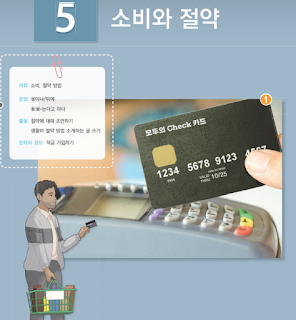
KIIP 3 (New book) - 5과: 소비와 절약 Consumption and Savings
(Page 62)
1.
지출 내용 :
교통 카드 충전: Top-up of transportation card
두통약: Headache medicine
학원: Academy
요금: Fee
휴대 전화 요금: Mobile phone bill
축의금: Gift money
조의금: Condolence money
전기 요금: Electricity bill
지출 항목: Expenditure items
경조사비: Condolence expenses
공과금: Utility fees (Tax or fees that the government or authorities collect from individuals for utilities such as electricity, telephone, water, etc.)
2.
살 것을 미리 메모하다: Note down things to buy in advance (메모하다: to take note, to jot down)
가계부를 쓰다: Keep household accounts
할인 카드로 결제하다: Pay with a discount card
포인트를 /쿠폰을 적립하다: Accumulate points/coupons (쿠폰: coupon = voucher, discount coupon)
충동 구매를 하지 않다: do not make impulse purchases (충동: impulse)
Grammar (Pages 63,64)
1. N + 이나 / 밖에 Click here
잠시드: 이번 달에 교통비로 12만 원을 썼어요.
반장님: 12만 원이나 썼어요? 왜 그렇게 많이 썼어요?
Jamsid: I spent 120,000 won on transportation this month.
Banjangnim: You spent (as much as) 120,000 won? Why did you spend so much?
가: 노트북을 사용할 때 자꾸 화면이 꺼져요.
나: 산지 1년밖에 안 됐는데 벌써 고장 난 거예요?
A: The screen keeps turning off when I use the laptop.
B: It's only been a year since you bought it, and it's already broken?
저는 하루에 커피를 다섯 잔이나 마셔요.
He drinks as many as five cups of coffee a day.
이번 달에는 통신비가 27,000원밖에 안 나왔어요.
This month, the communication expenses were only 27,000 won.
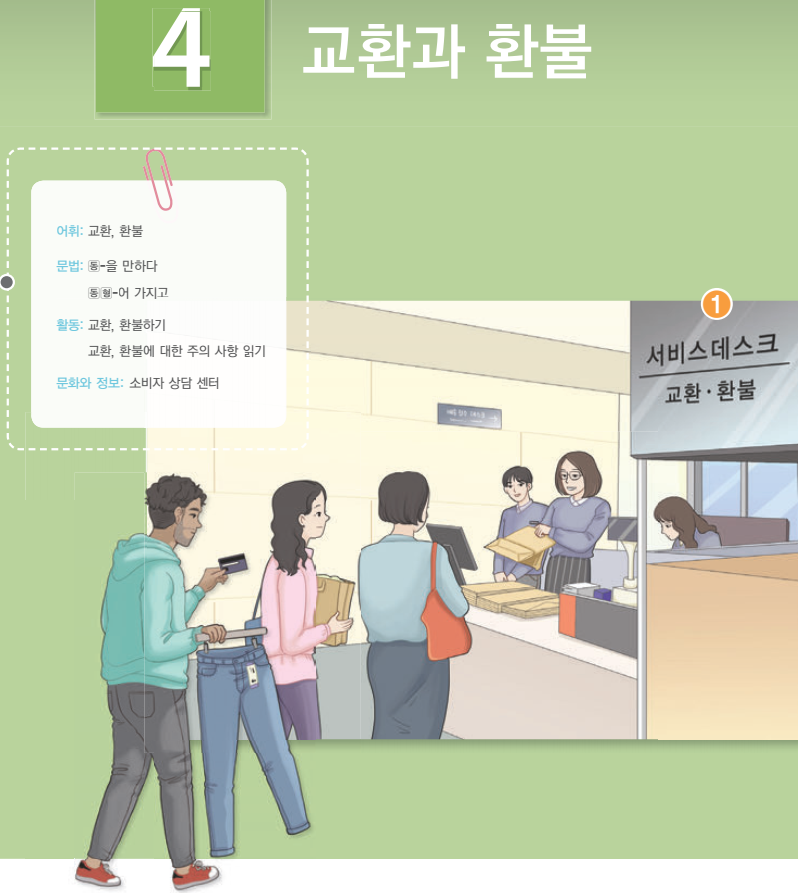
KIIP 3 (New book) - 4과: 교환과 환불 Exchange and refund
(Page 50)
1.
사이즈가 작다: The size is small.
색상이 다르다: The color is different.
바지가 헐렁하다: The pants are loose.
헐렁하다: Loose.
바지가 끼다: The pants are tight.
얼룩이 있다: There is a stain.
얼룩: Spot, stain.
단추가 떨어지다: The button has fallen off.
단추: Button.
바느질이 잘못되다: The stitching is wrong.
바느질: Stitching.
디자인이 마음에 안 들다: I don't like the design.
2.
교환하다: Exchange
문의하다: Inquire
고객 센터에 문의하다: Contact customer service
환불하다: Refund
소비자 상담 센터에 상담하다: Consult with consumer counseling center
Grammar (Pages 51,52)
1. V + (으)ㄹ 만하다: (click here)
This expression is used to indicate that something is worth doing. Thus, it is mostly used to recommend something to someone else.
후 에: 이 책상은 좀 오래돼서 이제 바꿔야겠어요.
박민수: 이 책상요? 오래됐지만 아직 튼튼해서 쓸 만해요.
Huyen: His desk has been around for a while, so I think I should replace it now.
Park Min-soo: This desk? It's been a while, but it's still sturdy enough to use.
•가: 사회통합프로그램 3단계 공부가 어때요?
나: 2단계보다 어렵지만 공부할 만해요.
A: How is studying the Social Integration Program Level 3?
B: It's more challenging than Level 2, but it's manageable to study.
•물냉면은 맵지 않아서 먹을 만해요.
Mul-naengmyeon is not spicy, so it's tasty to eat
•요즘 볼 만한 영화가 있으면 소개해 주세요.
If there are any good movies to watch these days, please introduce them to me.
KIIP 3 (New book) - 3과: 지역 복지 서비스 Local welfare services
Page 38
상담: Consulting
• 임금 체불: Unpaid wages
• 상담을 받다: Receive counseling
• 통번역 서비스: Interpreting services
• 구직/창업 상담을 받다: Receive job/start-up counseling
아이: Child
노인: Elderly
• 아이를 맡기다: Entrust the child
• 맡기다: Entrust
• 장난감을 대여하다: Rent toys
• 육아 정보를 얻다: Obtain parenting information
교육: Education
• 건강 검진을 받다: Receive a health check-up
• 예방 접종을 받다: Receive vaccinations

가: 문화 체육 센터에서 무엇을 배우는지 알아요?
나: 네, 제과 제빵하고 한식 조리를 배울 수 있어요.
A: Do you know what you can learn at the cultural and sports center?
B: Yes, you can learn pastry and baking, as well as cook Korean food.
• 외국인도 복지 서비스를 이용할 수 있는지 아는 사람이 많지 않다.
Many people are not aware that even foreigners can access welfare services.
• 상담 센터가 몇 시에 문을 여는지 몰라서 홈페이지를 찾아보았다.
I didn't know what time the counseling center opens, so I looked it up on their website.

KIIP 3 (New book) - 2과: 성격 Personality
Page 26:
□ 외향적이다: be extroverted
□ 내성적이다: be introverted
□ 적극적이다: be active
□ 소극적이다: be passive
□ 꼼꼼하다: meticulous; elaborate; careful
□ 덜렁거리다: be careless
□ 다정하다: kind, friendly, warm-hearted and affectionate.
□ 무뚝뚝하다: blunt, stiff, brusque
□ (성격이) 느긋하다: comfortable; relaxed; carefree
□ (성격이) 급하다: impatient, urgent, hurried
Page 27~28
1. A + 아/어지다: click here (Page 27)
-아/어지다 expresses a change in state over time and means ‘become’ or ‘turn’ in English. If the stem ends in the vowel ㅏ or ㅗ, then -아지다 is used. Otherwise, -어지다 is used. As for verbs ending in 하다, the form changes to 해지다.
반장님: 잠시드 씨, 예전에는 실수를 자주 했는데 요즘은 많이 꼼꼼해졌네요.
Mr. Jamshid used to make a lot of mistakes, but these days you've become very meticulous.
잠시드: 감사합니다. 아직 배울 게 많아요.
Jamshid: Thank you. I still have a lot to learn.
•가: 아이 성격이 어때요?
What is your child's personality like?
나: 태권도를 배운 후부터 많이 활발해졌어요.
He became very active after learning Taekwondo.
•고향에 있을 때는 성격이 느긋했어요. 한국에 와서 많이 급해졌어요.
When I was in my hometown, I was easygoing. After coming to Korea, it became very urgent.
•이제는 한국 생활에 많이 익숙해졌어요.
I got used to living in Korea now.
KIIP 3 (New book) - 1과: 대인 관계 - Interpersonal relationship
1. (Page 14)
1/ 친구 friend, fellow; dude - 동창 alumnus; classmate
• 공감대가 없다: no consensus
• 사이가 멀어지다: to fall apart, to grow apart (from somebody)
• 연락이 끊기다: to lose contact
선배 - senior, veteran, 후배 - Junior
• 선배를 대하기 어렵다: to be hard to deal with seniors
• 후배가 나를 어려워하다: to be uncomfortable with juniors
상사 - superior, boss, 동료 - coworker, colleague, 부하 직원 - a junior staff, a subordinate
• 상사의 지시를 거절하기 힘들다: to be difficult to refuse orders from the boss
• 동료에게 도움을 요청하기 어렵다: it be difficult to ask a colleague for help
• 일하는 방법을 잘 모르다: To not know how to work
2/
• 자주 연락을 주고받다: communicate frequently
• 이야기를 잘 들어 주다: to listen to someone carefully
• 의견을 솔직하게 말하다: To express opinions frankly
• 서로 예의를 지키다: to be polite to each other
• 공감을 잘해 주다: to be sympathetic to sb
• 함께 시간을 보내다: to spend time together